The weekly status meeting isn't going away. It probably shouldn't go away. The trade coordination function — who needs access to what zone when, which subs are about to step on each other, what the crane schedule looks like for the next 10 days — that requires people talking to each other, in real time, with the ability to negotiate and commit on the spot. No dashboard replaces that.
But one specific part of the meeting is a candidate for partial replacement: the first 20 to 30 minutes where everyone establishes the current state of the project. "Where are we on structural through Level 14?" "Is the curtain wall crew still running behind?" "What's the mechanical sub's forecast for rough-in on Floors 8 and 9?"
These questions should not need to be answered in a meeting. They should be answered by data before anyone walks through the door.
What the current state-setting actually costs you
On a large commercial project, the weekly OAC or coordination meeting might have 15 to 25 participants: GC PM and superintendent, owner's rep, architect's project manager, structural and MEP engineers of record, major trade supers, occasionally an owner's construction manager. At fully-loaded rates, an hour of that group's collective time is meaningful cost. More importantly, it's meaningful cognitive cost — people arrive prepared to answer "where are we" rather than prepared to solve "what are we doing about where we are."
The state-establishment phase of the meeting is inefficient not because people are bad at it, but because it requires assembling information from multiple parties who each have partial knowledge. The GC PM synthesizes from sub reports, floor walks, and instinct. The subs each know their scope. The owner's rep is cross-referencing against the schedule they got two weeks ago. Everyone's working from different data that they've updated to different points in time.
The result is a negotiated current state that averages optimistic sub reports against the GC's private discounts against the owner rep's skepticism, and produces a consensus view that's probably within 10-15% of reality. That's often good enough to run a meeting. It's not good enough to drive a genuine critical-path conversation.
What "answered by imagery" means practically
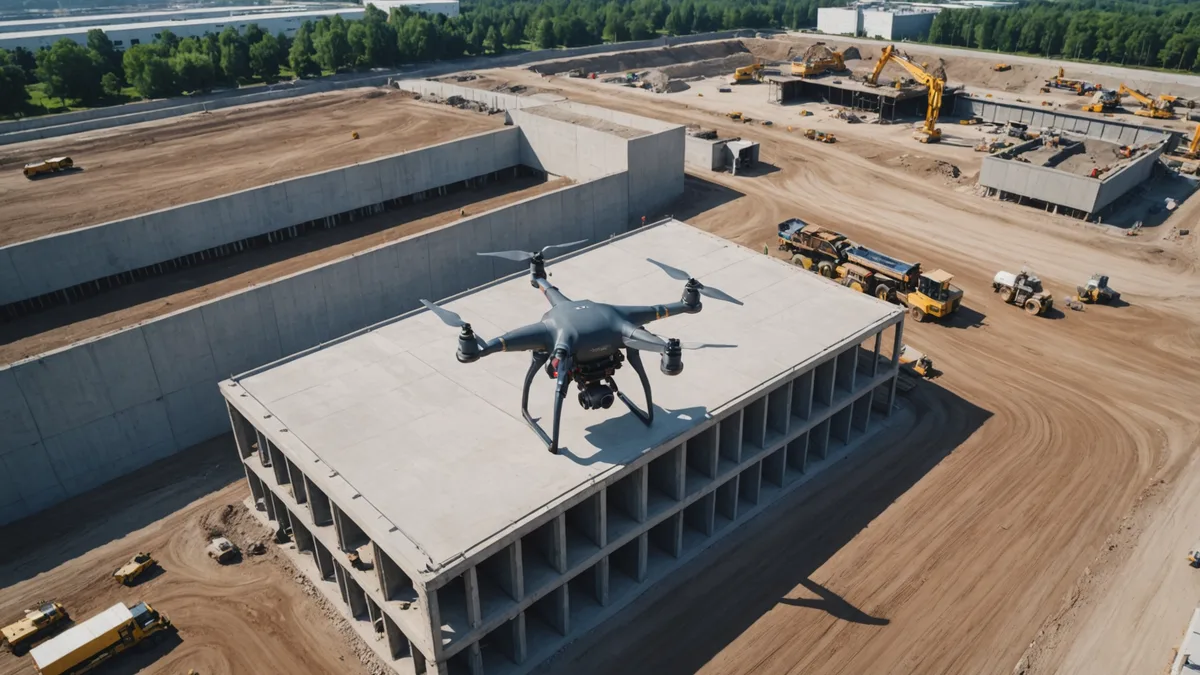
The practical version of imagery-based pre-meeting status isn't a live drone hovering above the site on Friday morning. It's a scanning workflow built around the meeting cadence: flights on Wednesday or Thursday, processing overnight, deviation report available by 7am Friday. Everyone in the meeting has seen the report before they arrive.
The report doesn't need to be complex. For a 20-floor commercial building in the structural phase, the useful pre-meeting artifact is a one-page table: floors by package, planned percentage complete this week per CPM, observed percentage complete from the scan, deviation. Four columns. Maybe 12-15 rows covering the active work zones. Anything deviating by more than 8-10 points gets a flag.
The meeting opens with the flags. "We have three areas tracking behind: Level 12 steel is −18%, Level 13 metal deck is −12%, and the curtain wall package is −9% overall. Structural super, what's the story on Level 12 and what's your plan?"
That's a different opening than "OK, let's go around — structural, where are you?" The second opening takes 20 minutes to establish a version of the same information. The first opening takes 2 minutes because everyone already read the report, and the conversation immediately focuses on recovery rather than discovery.
What imagery does not replace in the meeting
Being specific about the meeting functions that drone data doesn't cover:
Trade coordination and sequencing. Which crew goes where next week, how long each sub needs in each zone before the next trade needs access, how a change in the structural sequence affects the mechanical sub's 3-week look-ahead — this requires the people who own the work to be in a room or on a call talking through the logic. Imagery tells you where progress stands. It doesn't negotiate trade sequencing on your behalf.
RFI and submittal status. An RFI log review, open submittal tracking, pending change orders — this is the administrative spine of the project meeting and it's completely outside the scope of site imagery. The BIM-derived progress data doesn't know that the Level 10 mechanical rough-in is behind because the equipment submittal is still pending engineer review.
Relationship and political dynamics. When two subs have a disputed interface condition, or when there's tension between the GC and the owner about schedule accountability, the meeting is partly a negotiation and partly a trust-maintenance mechanism. No data system changes this. In fact, having clearer factual data sometimes creates new political tension — the sub whose progress numbers used to be optimistic estimates now has to address actual measurements.
Field conditions and surprises. Hidden conditions, utility conflicts, unexpected soil conditions — the superintendent needs to describe these in context. The scan shows what's been built; it doesn't explain why a work zone was paused for two days because the geotech found something unexpected at the foundation level. That narrative needs to come from the field.
The cultural change that matters more than the meeting format
When imagery data is running consistently, something changes beyond the meeting format. Subs who know their progress is being measured independently tend to report more accurately and flag developing problems more proactively. Not because they're compelled to, but because the incentive to manage optimistic appearances is reduced when everyone in the room already has the numbers.
This shift is subtle but compounding. A super who might have reported "90% complete" on Level 9 framing in a no-imagery environment will say "the scan shows 78%, and we have two connection details to finish, we'll be done by Thursday" when imagery is running. That's a more actionable statement. It leads to a better crane schedule. It lets the downstream trade plan their mobilization with real data. The quality of downstream planning improves because the input data quality improved.
We've found this effect is more valuable, over the course of a project, than the direct delay detection capability of the imagery. The delay detection catches specific problems. The cultural shift to more accurate reporting prevents a class of problems from accumulating in the first place.
The Friday meeting you actually want
The Friday meeting worth having looks like this: everyone has read the deviation report. The GC opens with the three flagged areas. Each affected sub comes in with a plan, because they knew before they arrived what would be discussed. The coordination conversation — who's going where next week — is calibrated to the actual state of the work, not the optimistic state of the work. The owner's rep leaves with documented commitments against a factual baseline, not a summary of verbal assurances.
The meeting doesn't get shorter because imagery is running. In our experience it runs approximately the same length. What changes is the mix: less time establishing state, more time solving problems. That's a different meeting even if the clock says the same thing.
One more benefit that tends to get underweighted: the visual record created by regular site scanning is a project history that doesn't depend on anyone's memory. When a dispute arises six months later about when a delay started and who was responsible, you have timestamped imagery showing the exact state of every floor on every scan date. That's not why you build the monitoring program, but it turns out to be one of the most-used outputs by the time the project is in closeout.
Drone imagery doesn't replace the meeting. It changes what the meeting is for — from information gathering to problem solving. That's the partial replacement worth making.